


10 Books To Read Before Turning 18
- Between Spines

- Mar 26, 2021
- 9 min read
Updated: Jul 5, 2021

We have both been fascinated by literature from a young age and when we were sixteen, made the decision to take English Literature at A-level in order to expand our interests into something more academically concrete. However, during our time at university, we lost touch with our passion in reading for pleasure and have, in the last eighteen months, expanded our breadth of interests in different genres and styles to lengths we could not have previously imagined.
At school, we all study assigned texts in detail, yet this only gives us a flavour of all of the fabulous books that we can spend the rest of our lives enjoying. Furthermore, when we study certain themes repeatedly, the excitement can wear thin, particularly when writing multiple essays and studying for examinations.
We have therefore decided to curate a list of 10 books that we wholeheartedly recommend to readers before turning 18, most of which we wish we had been exposed to before reaching this milestone ourselves. This list addresses many genres and generations, exploring ideas around race, sex, adolescence, sport, and crime. We believe that each book provides unique insight into each of these fundamentally important themes.
1 | 1984

This is an incredibly popular read, but we believe this book is integral in teaching teenagers the importance of truth, liberty, and raw human emotion in wider society. Orwell published the novel in 1949, which has grown to be far more evocative with time.
When confronting novels depicting utopias and dystopias, it may be easy to assume that many authors seek to create political allegories and intend to say something about the world they live in and what the future may hold. Indeed, Orwell’s prophecy is unsettling and consists of real tropes of authoritarian governance. However, the plot of the novel is no less compelling as a result. It is a story about romance, loneliness, and fear. This is of course set among a society that necessitates apprehension and restricts freedom on a mass scale. Yet Orwell’s oeuvre is infamous not purely for one reason. It has so much to offer so many of us, and that is why it is still so revered and discussed as the world continues to change around us.
As previously mentioned in our classics article, ‘it is essential reading for our younger generation, with such excessive usage of social media akin to sticking one’s head in a box full of rats.’
2 | TO KILL A MOCKINGBIRD
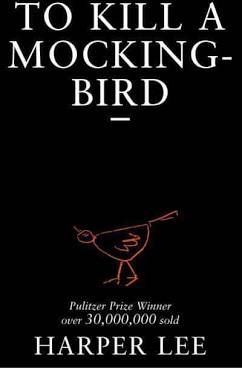
Harper Lee’s 1961 Pulitzer Prize novel is a book that will resonate with us for years to come. It is a child’s exploration of the race and injustice of American deep-south during the Depression. The protagonist is young Scout Finch, daughter of Atticus and sister to Gem, who grows up motherless in the small town of Maycomb, Alabama. The story follows the lives of the three family members and the struggles within 1930s America.
The central themes of the book are racism, prejudice, and discrimination, all of which are underpinned by the strength of character through moral voices such as Atticus. Atticus serves as a Lawyer in the town, and he is perceived to the white folk as an upstanding member of society, up until the point he chooses to defend a black man who has been accused of raping a white woman. It is this decision as a white man which shapes the novel, as Lee depicts ‘good versus evil’, instead of ‘black versus white’.
One of the most impressive and spine-chilling scenes of the book occurs in the courtroom. Race divisions are at the forefront of the scene, which frames the nature of Attitcus’ defense speech. It is here we see the deep-rooted nature and power of discrimination within America and individuals such as Atticus represent the importance of moral education to stand against racial injustice. Harper Lee wrote with power and grace, as she illustrates this charming coming of age story, as we watch Scout and Gem navigate the racial prejudices and overcome adversity which provides a lifelong message.
3 | THE COUNT OF MONTE CRISTO

This novel is one among many superb adventure novels by Alexandre Dumas, with other famous titles ‘The Three Musketeers’ and ‘Twenty Years After’ inspiring generations of readers. This text is understandably a daunting prospect to readers of all ages (consisting of over 1,200 pages), but it is nonetheless boundlessly compelling, luring you in from the poetic opening passages.
The novel is about vengeance, loyalty, and deception as we follow Edmond Dantes through a life that promised marriage and prosperity but quickly become one of incarceration and unimaginable torment. Wrongly imprisoned because of his alleged involvement in a Bonapartist conspiracy, Edmond spends his salad days holed up in one of the most hellish dungeons of the Chateau d’If, plotting his escape and revenge with the wise Abbe Faria, who tells him of the inherited fortune that he has on the island of Monte Cristo. Here, we are immersed in the genesis of one of the most exciting stories of all time. Dumas made his literature very accessible, using dramatic irony and intrigue to keep the plot moving quickly yet subtly, amazing us with his descriptions of Rome and Paris.
Probably the greatest reason why this is the perfect classic text for young readers is that Edmond is a superhero at heart. Upon his escape from prison, he possesses powers that seem supernatural. He is motivated by trauma and injustice, but he is also forced to confront his own morality in the process of claiming his holy retribution.
4 | FATHERS AND SONS

Ivan Turgenev is one of the most celebrated novelists of 19th Century Russia, writing during a golden age that produced writers such as Pushkin, Lermontov, Dostoyevsky, Goncharov, and Tolstoy. Turgenev wrote in a Realist style, writing about evocations of love, the psychology of serfs, and the convergence of rural and urban sensibilities.
In ‘Fathers and Sons’, we are introduced to Bazarov, a student from St. Petersburg who becomes the story’s nihilist ‘anti-hero’, a concept which Russians were introduced to in Pushkin’s Eugene Onegin and Lermontov’s A Hero of Our Time. The reason for selecting this novel ahead of these preceding texts is because of Turgenev’s sublime capturing of the philosophical exploration of young men and the devastating potential of what happens when their ideas confront entrenched aristocratic ideals.
Turgenev writes these themes with a human relatability, focusing intently upon character. Turgenev critiques and challenges Bazarov’s nihilist outlook by exposing him to a beautiful woman and seeing just how superfluous he thinks life is after falling in love. Richard Freeborn’s translation of the text for Oxford World’s Classics is beautifully readable and offers insightful introductory notes and context for fully appreciating the brilliance of Turgenev.
5 | COLUMBINE

Dave Cullen’s account of the Columbine High School massacre of April 20, 1999, is a comprehensive and utterly gripping re-telling of how and why Eric Harris and Dylan Klebold murdered twelve of their fellow students and one teacher in what was actually a failed attempt to kill hundreds in a bombing of the school. Cullen sheds a heart-breaking light upon the tragedy, demonstrating a superb understanding of Harris and Klebold, plunging into immense depth regarding the run-up to the events of the day itself, and highlighting how Americans still live with the aftermath of the murders.
This book exposes the most dangerous potential of young adults. Although this book does not claim to politically solve the discussion around the possessions of guns in America, it touches upon every pore of our human emotions and our innate nature. The questions which Cullen poses are hugely uncomfortable, but if we are to be true to our younger people, we must expose them to the domestic evils society that can lurk among us.
With such tragic events, there is never complete closure for those intimately involved, let alone for people who read and learn about them. We should consider this when confronting such troubling topics and consider how important it is to discuss teenage mental health issues and questions about how almost possible it is for parents to read signs of depression in their children.
6 | THE SECRET HISTORY
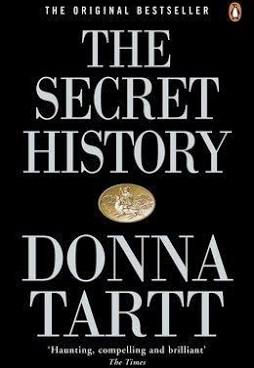
Does apprehension predominate over surprise? A conventional thriller consists of twists and turns, with a shocking denouement providing a conclusive ending to the story, tying up the loose ends and leaving us satisfied. However, in this modern classic from Donna Tartt, our narrator Richard Papen describes in the novel’s prologue how he and his four fellow collegemates are responsible for the murder of their friend Bunny, with the rest of the long novel providing a complete portrait of how and why they had to resort to their actions.
The novel is set at Hampden College, Vermont. You may be forgiven for expecting some of the typical collegiate tropes of fraternity parties, drugs, and alcohol. Indeed, Richard and his friends have their fun, but their escapades take on a much darker and chilling complexion as we become acquainted with them.
As we are aware of Bunny's fate, the novel is still vastly accomplished because it does not let the act of murder become the core focus of the story. Richard's passionate, philosophical and nostalgic narration provides a poignant weight to the novel itself. Tartt writes with remarkable power and the cerebral element which she employs is inspiring. The consequences which befall the group are troubling, yet it is the haunting suspense that precedes such moments which endures the most for us. Not only is Tartt's writing fabulous, but the impeccably controlled nature of the plot is mesmerising.
7 | STONER
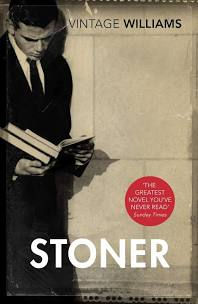
John Williams’s most revered novel is a wonderful story founded upon the profound search for human identity, life’s meaning, and the tribulations of love. William Stoner discovers the wisdom of literature after seeing his life mapped out by his agricultural family. From here, Stoner’s time at the University of Missouri becomes the scene where the rest of his life plays out and an endearing campus story transpires.
The beauty of Williams’ writing is deft and the simplicity of his style is rather charming. Williams’s portrait of Stoner’s married life is sublime and his character development is raw but also accomplished. How Williams deals with bereavement is also admirably frank. We learn a great deal about Stoner and his wife Edith through how they deal with such challenging situations. The denouement is Williams at his evocative and dramatic best. How he delicately places Stoner’s life into a wider meaning is endearing and satisfying. It is a novel of simplicity and beauty.
8 | NOT A LIFE COACH

With the thousands of different self-help books on the market, you almost need a self-help guidebook to assist you in purchasing the right self-help book. The reason this book makes it into our list is because of the unapologetic and forthright approach James Smith takes compared to many other authors that we have read.
The book is not ground-breaking in its content, but Smith conveys his message in such a powerful way to help you reassess your goals and priorities. He not only challenges your pathway to fulfillment but assists you on your journey as well, by providing short tasks throughout the book. We believe this book should be read in your teens because it reinforces the structure required when making big decisions about our futures. Whether its a decision surrounding attending university or whether to put a deposit down on a mortgage, quitting your job, or even choosing the right relationships to develop. It is the perfect lighthouse to help you successfully navigate the way into adulthood (or at any point in life). But most importantly, the key message to take from the book is that if it doesn’t challenge you, it won’t change you.
9 | A STREETCAR NAMED DESIRE

Tennessee Williams published A Streetcar Named Desire in 1947 and is a tragedy centered around the destructive relationships between sisters Blanche and Stella and her husband Stanley, set in a working-class district of New Orleans in the 1940s.
The play consists of social realism and is underpinned by a critique of the power structures behind the conditions in which the characters live. It explores three key themes; fantasy’s inability to overcome reality; the relationship between sex and death; and the dependence on men.
Williams' vivid writing cleverly depicts the themes and motifs of the play throughout, as you can picture the evocative emotion which forms an atmosphere within the apartment of which it’s set. We witness three entirely contrasting characters all at their most vulnerable, each of whom wears a mask to delude others (whilst ironically deluding themselves) and coveting secrets, whilst also experiencing the raw human traits of good versus evil that are possible within ourselves. It is a beautiful yet tragic portraitit surrounding the destructive nature of love and relationships with a pivotal motif of mental health.
10 | FEVER PITCH

Hornby’s open biographical account is a glorious Bildungsroman of sorts. We intimately join him on his first trips to watch Arsenal Football Club and witness how his experience as a fan changed as he grew (physically and figuratively). Hornby evokes the tangible and intangible experiences that come with dedicating oneself to a football team, and he goes to all corners of England in his devotion to the club. His anecdotes are endearing and witty, but there are also moments of profound realisations and personal philosophy.
This book is highly recommended not merely for readers interested in football. Hornby unpacks what it means to be young and part of something bigger than yourself, even something holy. It is about belonging, loyalty, and most importantly, winning and losing. There is a juxtaposition between maturity and frivolous naivety which permeates through Hornby’s prose, most encapsulated by his conclusion,: ‘Nothing ever matters, apart from football.’


Comments