


A Clockwork Orange: ‘A Real Horrorshow’, Timeless Masterpiece
- Charlie Pritchard

- Feb 16, 2021
- 6 min read
Updated: Jul 5, 2021
"The night belonged to me and my droogs and all the rest of the nadsats, and the starry bourgeois lurked indoors drinking in the gloopy worldcasts, but the day was for the starry ones, and there always seemed to be more rozzes or millicents about during the day, too."
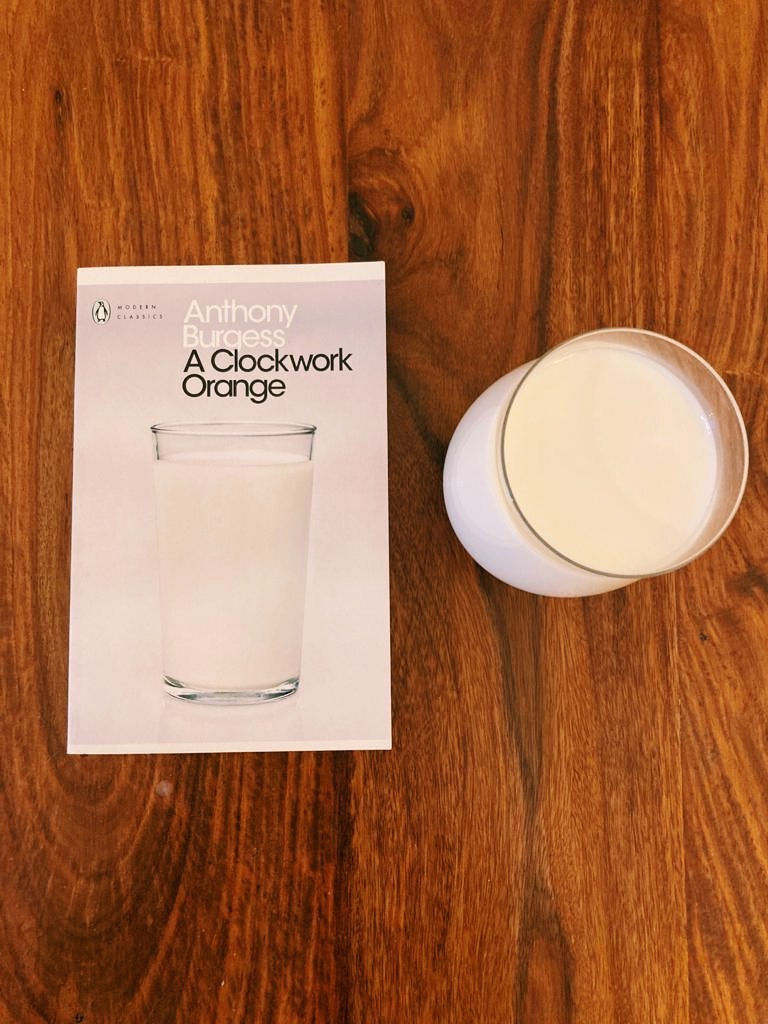
Is it better for man to choose to be bad or to be conditioned into being good? This is the question posed by Blake Morrison in his introduction to A Clockwork Orange, featured in the Penguin Modern Classics edition of the novel. To Morrison, this question simplifies the ‘devastatingly simple’ moral dilemma of Burgess’ most famous work which continues to arouse huge intrigue. In this feature, we will delve into the key themes of A Clockwork Orange and discuss how to get the most out of Burgess’ shocking novella.
The book begins with fifteen-year-old Alex, who we first meet as he and his droogs (friends) discuss their plans for the evening ahead. From the start, we are transported head-first into their world of treacherous ultra-violence, rape, and robbery. Alex and his friends bomb around their city with a sadistic malevolence, randomly selecting their targets. Their crimes are never petty, they are disturbing and horrific. Neither do the gang operate within boundaries, and their behaviour is instinctive, making the opening chapters deeply unpleasant.
The state is initially depicted as a powerless force, seemingly ignorant of the gang’s activities. For Theodore Dalrymple, this is a prophetic element of the novel. Dalrymple noted that Burgess astutely observed the patterns of power developing in youth culture during the time he was writing. He also argues that ‘Burgess expanded on the nature and characteristics of youth culture when left to its own devices, and what the impact is upon society when that culture becomes predominant.’ Although in today’s society young groups do not operate to the extent of Alex’s in the novel, it takes nothing away from Burgess' complex vision.
The fascinating dynamic between the older and younger generations in A Clockwork Orange is best embodied by Alex’s relationship with his parents, ‘pee and em’. Alex has a propensity to blare out Beethoven and Mozart when he returns to his bedroom after a long night of terror. As Dalrymple observes, instead of requesting that Alex turn the music down, his parents take sleeping pills, demonstrating their adjustment to the power shift in their own home.
Another example of Alex’s intimidation is illustrated in how he resists his father's curiosity regarding his whereabouts. Alex tells his father nothing about what he and his friends get up to, and he gladly receives an apology from his father who ‘does not mean to pry’. The youth are thus no longer subservient to their elders, it is the other way around. This concept is taken by Burgess and multiplied considerably, adding layers of horror to his prophecy for youth culture.
One of the most intriguing and enduring features of Burgess’ novel is Nadsat (Russian for ‘teen’), the youth slang used between Alex and his cronies. If we unpack the impact of Nadsat, it is central to our understanding of the novel. Firstly, as noted in a feature by Peace_Love_Books, the grotesque and despicable acts committed by Alex are ‘offset by the use of Nadsat.’ This means that as we are reading the scenes of rape and ultra-violence, they are initially conveyed in a less blatant and graphic manner. Therefore, these scenes are less appalling at first glance than, for example, those in American Psycho, by Bret Easton Ellis, who wrote with chilling frankness.
However, as Peace_Love_Books has observed, when you instrumentally translate the slang, Alex’s behaviour becomes more disturbing. This is because you physically have to re-read the scenes instead of squeamishly skimming over the details. Furthermore, if we consider the acts of Alex in A Clockwork Orange in comparison with Patrick Bateman in American Psycho, we cannot escape the youth of Alex and his victims. Instead of taking something away from Bateman’s equally appalling treachery, this instead exacerbates the chilling evil of Alex’s violence, which is sickening to comprehend.
The second impact of Nadsat within the novel is in its wider meaning of how Alex and his friends view the society around them. In 1962, in his review of A Clockwork Orange, Kingsley Amis argued that the slang ‘not only gives the book its curious flavour, but also fits in with its prevailing mood.’ This mood which Amis refers to is the atmosphere perpetuated by the state. Alex’s criminality is underpinned by a sense of freedom and a belief that he is not under the surveillance of the police, who he has experience in conning.
Dalrymple offers a fascinating insight drawn from his personal experiences working in a prison for fourteen years, which sheds an original light on the advent of Nadsat in the book. Dalrymple notes that inmates would communicate through their own slang in order to evade the guards' attention, and ‘it was their means of resisting domination.’ Dalrymple maintains that the importance that Burgess ascribes to the new argot in A Clockwork Orange ‘suggests that he saw youthful revolt as an expression more of self-indulgence and criminality than of idealism.’ We can therefore see that Nadsat has a multi-layered function, firstly in how we perceive violence and secondly in how it alienates Alex and his gang from the rest of society.
Ultimately, Alex’s self-indulgence alienates him from his own gang and he becomes dismally isolated after his arrest during the burglary of an old woman, teeing up the second part of the novel. This second section of the novel is central to its legacy, and it is when we are introduced to the ‘Ludovico Technique’. This clinical process is led by Dr. Brodsky, who forces Alex’s eyes open, forcing him to watch scenes of rape and ultra-violence to the sound of Beethoven’s Ninth. This, as Peace_Love_Books notes, 'opens the debate of freedom versus enforced obedience and "goodness" as being the best for society’. Although Alex’s crimes are downright despicable, the paradox lies in whether we agree with such extreme state intervention in order to change him into a ‘better person’, stripping him or his ‘moral agency’ in the process.
The specifics of the process which Alex undergoes and the aftermath of his torture will be left out here to avoid spoilers, so we will touch on the wider discussion around the fundamental questions Burgess posed. Dalrymple maintains that two questions linger: ‘how do we achieve goodness, both on an individual and social level, without resorting to the crude behaviourism and the Ludovico Method or any other form of cruelty?’ This notion is compelling. It is clear that Alex is psychopathic and his ambivalence towards his victims demonstrates no signs of emotion nor reflection. How will he change if the state does not intervene?
Secondly, Dalrymple asks, ‘can we bypass consciousness and reflection in our own struggle to behave well?’ After all, we do not encounter any of Alex’s three friends again between the time of Alex’s incarceration and the conclusion of the novel. We observe how their lives have changed since their youthful years of ultra-violence and wonder, could Alex have undertaken a mature development without the Ludovico Method? Is this for us, the average reader, to decide? If so, that is a monumental undertaking.
Dalrymple is unanimous on where he stands regarding this idea. He concludes: ‘one cannot condemn a novel of 150 pages for failing to answer some of the most difficult and puzzling questions of human existence, but one can praise it for raising them in a peculiarly profound manner and forcing us to think about them. To have combined this with acute social prophecy (to say nothing of entertainment) is genius.’
Even when we strip the novel back and take its contents at face value, avoiding giving it our own Ludovico treatment, we cannot elude how remarkably compelling it is. The novel’s short length forbids us from becoming comfortable, nor gives us the time to deeply investigate the immorality which underpins its action. The novel’s problematic themes linger long after we put the book down and this is surely any given writer’s ideal objective.
However, it is fundamental that we remember how the novel was received in 1962 and I would urge readers to try as hard as they can to cast their minds back to that time and consider just how daring Burgess was in writing A Clockwork Orange. Remember the words of Kingsley Amis before you begin: ‘Burgess has written a fine farrago of outrageousness, one which incidentally suggests a view of juvenile violence I can’t remember having met before: that its greatest appeal is that it’s a big laugh, in which what we ordinarily think of as sadism plays little part.’ In the spirit of Amis, let us enjoy the novel first, and ask questions later.
To keep up to date with all of my reviews, follow me on Goodreads.


Comments